
_____
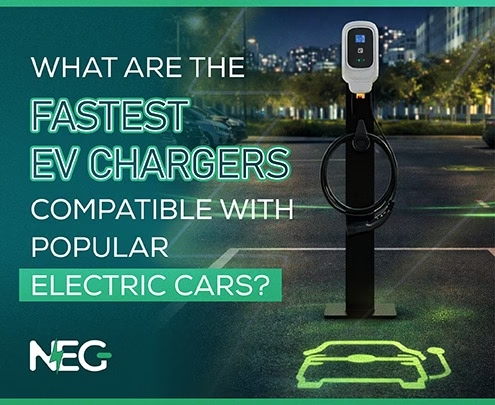
What Are the Fastest EV Chargers Compatible With Popular Electric Cars?
As electric vehicles become more common in Singapore, one question keeps popping up: what are the fastest EV chargers compatible with popular electric cars? It’s a fair question, especially for homeowners and businesses that want charging to be quick, safe, and practical.
The truth is, the “fastest” charger for your EV isn’t just about the charger itself. It also depends on your property’s electrical setup, your vehicle’s onboard charger, battery condition, and the connector standard your car uses. For most home users in Singapore, the fastest practical option is usually a 22kW AC charger, provided your property has three-phase electrical supply and your vehicle supports higher AC charging capacity. For properties with single-phase electrical supply, a 7kW AC charger is often the best fit for everyday use.
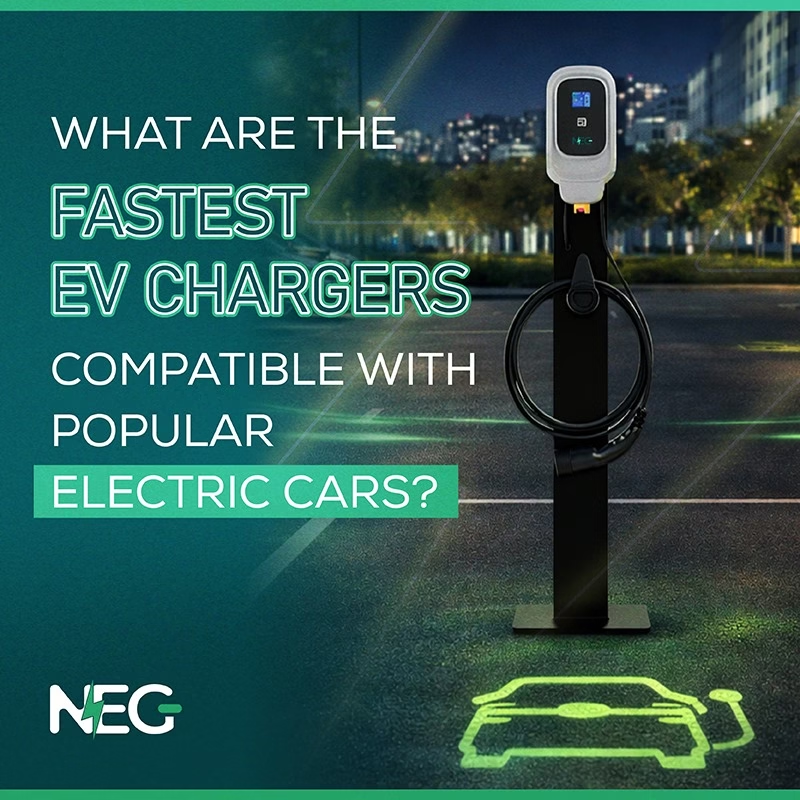
At NEG Power, products like the NEG 22kW EV charger and NEG 7kW EV charger come into play. Both are designed to support a wide range of electric vehicles in Singapore and offer dependable charging performance for residential and commercial users.
Why charger speed matters for EV owners
Let’s be honest, nobody wants to wait longer than necessary for a battery to charge. Faster charging means more convenience, better energy planning, and less downtime. That matters whether you are commuting daily, running a fleet, or simply trying to top up your battery overnight.
Still, faster doesn’t always mean better in every situation. A charger needs to match both the vehicle and the site. Installing a 22kW charger at home sounds great, but if your property only has a single-phase supply or your car can only accept 7kW AC, you won’t actually get the full-speed benefit.
That’s why compatibility matters just as much as charging power.
The fastest home EV chargers in Singapore
For home use in Singapore, the most common fast-charging option is usually a 22kW AC wallbox. These chargers are ideal for landed homes, condominiums, and some commercial sites where three-phase electrical supply is available.
Here’s the simple breakdown:
22kW AC charger
A 22kW charger is generally the fastest practical AC charging option for home or private property use. It can deliver much quicker charging than a standard 7kW unit, but only when the following conditions are met:
- The property has three-phase electrical supply
- The vehicle supports 11kW or 22kW AC charging
- The installation has sufficient electrical capacity
For drivers with compatible EVs, a 22kW charger can significantly reduce charging time and make daily use more convenient.
7kW AC charger
If your home has single-phase power, a 7kW EV charger is usually the more realistic choice. While it is slower than 22kW, it is still a very effective solution for overnight charging and regular daily use. In fact, many EV owners find that 7kW is more than enough for commuting, school runs, and everyday city driving.
So, while 22kW is often the fastest home charging option, 7kW remains a smart, efficient, and dependable charger for many homes in Singapore.
Which electric cars are compatible?
The good news is that many popular electric cars in Singapore are compatible with Type 2 AC chargers, which is the standard connection commonly used for home and destination charging.
The NEG 22kW EV charger is designed to support a wide range of well-known electric car brands, including:
- Tesla
- BYD
- BMW
- Hyundai
- Mercedes Benz
- Other Type 2 compatible EVs
This makes it a flexible option for households with one EV today and perhaps another brand tomorrow. That’s a big plus because EV ownership is evolving quickly, and drivers often want a charger that can work across multiple vehicle brands.
That said, compatibility goes beyond just the plug type. Every EV has its own onboard charger rating, and that determines how much AC power the car can actually accept. So even if you install a 22kW charger, your car may only charge at 7kW or 11kW if that is the vehicle’s maximum AC charging capability.
In other words, the charger can provide the power, but the car decides how much of it it can use.
What affects charging speed?
Even with the right charger, actual charging speed can vary. A few important factors influence the final result.
1. Vehicle onboard charger
This is one of the biggest factors. Your EV’s onboard charger determines the maximum AC charging rate it can accept. A 22kW wallbox will only deliver full speed if the car supports it.
2. Electrical supply
A property with three-phase power can support faster AC charging than a single-phase property. Without the proper supply, a 22kW charger cannot operate at full output.
3. Battery state of charge
Charging is not always linear. As the battery fills up, charging speed often slows down to protect battery health.
4. Installation quality
A properly installed charger is essential for safety, reliability, and performance. Poor installation can affect stability and limit charging efficiency.
5. Site electrical capacity
Your main electrical panel and overall property load must be assessed before installation. This helps ensure the charger can operate safely without overloading the system.
Why is site assessment so important
Before selecting a fast EV charger, it is strongly recommended to carry out a site assessment. This step helps confirm:
- Electrical capacity
- Single-phase or three-phase supply
- Cable routing requirements
- Charger placement
- Compatibility with your vehicle
- Safety and installation conditions
Skipping this step can lead to unnecessary costs, underperforming charging, or installation issues later on. A proper assessment ensures the charger you choose is the right one for your home or business.
For a brand like NEG Power, this is especially important because the goal is not just selling a charger. It is about delivering a charging solution that works well over the long term.
Choosing between NEG 22kW and NEG 7kW EV chargers
Both options have their place, and the right one depends on your needs.
The NEG 22kW EV charger is best for users who want faster charging and already have, or can support, a three-phase electrical setup. It is ideal for homes with compatible vehicles and for commercial premises that need a quicker turnaround.
The NEG 7kW EV charger is a strong choice for single-phase homes and drivers who mainly charge overnight. It may not be as fast, but it offers reliable, efficient charging that easily supports everyday driving.
For many EV owners, that’s more than enough. After all, if your car is parked for several hours overnight, a 7kW charger can comfortably replenish the battery for the next day’s use.
Why compatibility should be your top priority
When choosing an EV charger, it is tempting to focus only on the highest power rating. But the smartest decision is to choose a charger that matches your car, your property, and your routine.
A compatible charger gives you:
- Better charging efficiency
- Safer operation
- Better value for money
- Less risk of future issues
- Greater long-term convenience
That’s why a well-designed charger like the NEG range matters. It supports many of the popular electric vehicle brands in Singapore while also fitting different property types and charging needs.
FAQs
What is the fastest EV charger for home use in Singapore?
In most private residential settings, the fastest practical option is a 22kW AC charger, provided the property has three-phase electrical supply and the vehicle supports higher AC charging.
Can all electric cars use a 22kW charger?
Not necessarily. Many EVs can connect to a 22kW charger through a Type 2 connector, but actual charging speed depends on the vehicle’s onboard AC charger.
Is 7kW charging enough for daily use?
Yes, for many drivers, a 7kW charger is more than enough for overnight charging and daily commuting.
Are Tesla, BYD, BMW, Hyundai, and Mercedes-Benz compatible with Type 2 chargers?
Many models from these brands in Singapore are compatible with Type 2 AC charging. Vehicle-specific verification is still recommended before installation.
Should I do a site assessment before installing a charger?
Absolutely. A site assessment helps confirm electrical capacity, compatibility, and installation requirements for safe, stable charging performance.
You can contact us via WhatsApp for more information and to schedule a free site survey.