
_____
What Are the Maintenance Costs for EV Chargers Used at Home?
One of the main benefits of owning a home EV charger is the lowered costs in the long run from switching over from volatile gas prices to electricity. But if maintaining these chargers became a hassle or expensive, it would defeat that purpose.
Thankfully, with proper installation, maintenance afterwards is straightforward, easy and generally inexpensive.
Because residential EV chargers have few moving parts, routine maintenance is generally limited to simple visual inspections, basic cleaning and occasional electrical checks. When installed correctly and supported by preventive maintenance, most homeowners should not expect frequent servicing or major repair costs.
In this guide, we’ll explain why home EV charger maintenance costs are low, what routine maintenance involves and the factors that can affect long-term ownership costs.
Why Maintenance Costs for Home Chargers Are Generally Low
Not only are home EV chargers designed to operate reliably for many years, they also do not contain moving mechanical components that need regular servicing. Therefore, we often tell customers that the real question is not whether a home charger is expensive to maintain. It is whether it has been installed properly in the first place.
A charger that is correctly installed by a Licensed Electrical Worker is far less likely to experience avoidable faults later. Because the electrical installation has been done properly from the start, homeowners are less likely to encounter issues that require professional repairs, helping keep maintenance costs low throughout the charger’s lifespan.
However, just because it requires little maintenance, it does not mean it should be ignored altogether. Like any fixed electrical equipment, a charger still benefits from periodic inspection. But from a homeowner’s point of view, these are normally preventive checks rather than major repair events.
Most Routine Home EV Charger Maintenance Is Simple Preventive Care
Routine maintenance starts with checking the charger’s exterior for visible damage, such as cracks, loose mounting, signs of impact or water ingress. The charging cable and connector should also be inspected for cuts, abrasion, kinks, excessive wear or dirt buildup, particularly around the connector and areas where the cable bends frequently.
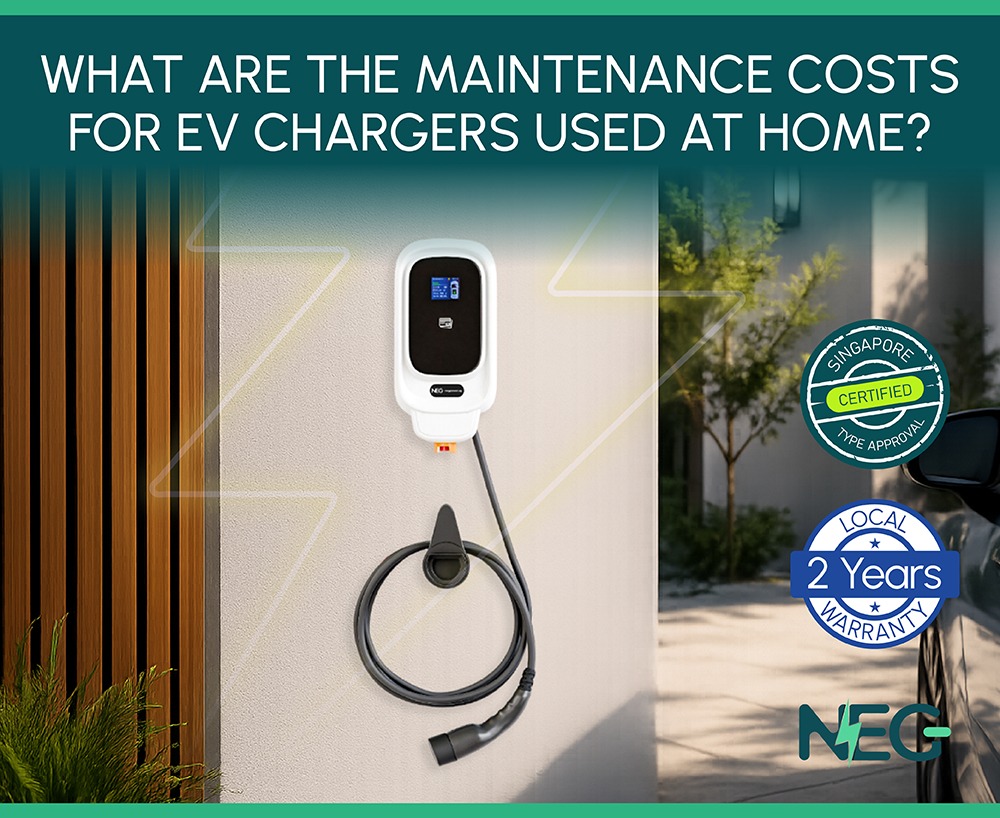
For outdoor or semi-outdoor installations, these checks are especially important due to Singapore’s heat, humidity and frequent rainfall. Keeping the charger clean and inspecting it periodically helps identify potential issues before they affect charging performance or safety. Chargers with suitable protection ratings, such as the NEG Smart Charger with an IP55 and IK10 rating, offer greater durability in these environments, but routine inspection remains essential.
Other than physical inspections, for smart AC chargers with features such as scheduled charging and app connectivity, firmware updates are another part of routine maintenance.
These updates can improve performance, resolve software bugs, maintain compatibility with newer software features and help ensure the charger continues operating reliably.
Professional Checks Help Prevent Costly Repairs
While homeowners can carry out routine visual inspections themselves, electrical testing and internal system checks should only be performed by a Licensed Electrical Worker (LEW) or qualified technician.
Professional inspections are part of preventive maintenance and help verify that circuit breakers, protective devices and the wider electrical installation continue to operate safely. In most cases, these checks confirm that the charger is functioning as intended and no further work is required.
If a fault or abnormality is identified—such as physical damage, repeated circuit breaker trips, inconsistent charging or exposed wiring—additional servicing or repairs may be necessary. Addressing these issues early is often simpler and less expensive than allowing them to worsen over time.
What Factors Affect Home EV Charger Maintenance Costs?
Although routine maintenance is generally inexpensive, several factors can influence how much maintenance a home EV charger requires over its lifetime. Most do not result in immediate repair costs, but they can increase the need for inspections, cleaning or professional attention over time.
1. Indoor vs Outdoor Installation
Indoor chargers are naturally exposed to fewer environmental stresses. Outdoor or semi-exposed chargers may require more frequent cleaning and inspection because of heat, moisture, and dust. This does not mean outdoor chargers are difficult to maintain. It simply means that environmental exposure should be taken into account when planning preventive care.
2. Frequency of Use
A charger used lightly for overnight home charging will generally experience less wear than one used multiple times a day. Cable handling, connector use, and repeated plugging cycles all contribute to normal wear over time. For most homeowners, this wear is gradual and manageable, but heavier usage may justify more regular inspection.
3. Electrical Condition of the Property
Older properties, aging distribution boards, or homes with limited spare electrical capacity may require closer monitoring. That does not always increase routine charger maintenance directly, but it can affect the wider electrical system supporting the charger. A proper site survey at the start helps minimise these issues by making sure the charger is matched to the property’s actual load capacity.
4. How Often Should a Home EV Charger Be Checked?
Homeowners should carry out a quick visual inspection periodically and whenever they notice changes in the charger’s condition or performance. Professional inspections should be arranged according to manufacturer recommendations, regulatory requirements or whenever faults are suspected.
Why Warranty and Local Support Matter
Even with proper maintenance, access to local technical support remains an important part of long-term ownership. The charger itself may be reliable, but if there is no local technical assistance, even a small issue can become time-consuming and expensive to resolve.
That is why we always recommend choosing a charger backed by warranty support and accessible local technical help. Preventive maintenance is valuable, but responsive support matters just as much when a charger needs diagnosis, replacement parts, or technical review.
For most homeowners, home EV charger maintenance costs remain low because the chargers themselves require very little ongoing attention.
The key is starting with a quality installation. A professionally installed charger is far less likely to develop avoidable faults, meaning maintenance is usually limited to simple visual inspections and occasional electrical checks rather than costly repairs.
With the right installation and sensible preventive care, a home EV charger should provide many years of safe, reliable charging while keeping maintenance costs to a minimum.
At NEG Power, we believe long-term ownership should be straightforward. A home charger should not become a burden. It should remain a dependable part of the property’s infrastructure, supported by proper installation and sensible after-sales care. Reach out to us today to get a free site survey for your future EV charger.
Frequently Asked Questions
1. Are home EV chargers expensive to maintain?
No. In most cases, home EV chargers have relatively low maintenance costs. Ongoing care usually involves inspection, cleaning, occasional testing, and checking the condition of cables and protective devices rather than frequent repairs.
2. What maintenance does a home EV charger normally need?
Typical maintenance may include visual inspection of the housing, checking cable and connector wear, verifying protection devices, cleaning the enclosure, and carrying out firmware updates where applicable.
3. Do outdoor home chargers need more maintenance?
Usually, yes. Outdoor or semi-outdoor chargers may need more regular cleaning and inspection because of exposure to heat, humidity, and rain. Chargers with suitable protection ratings are still recommended for these environments. NEG Power’s AC chargers are specified at IP55.
4. Does professional installation affect maintenance costs later?
Absolutely. Proper installation helps reduce avoidable faults and supports long-term reliability. In Singapore, fixed EV chargers must be installed by a Licensed Electrical Worker.
5. Should I choose a charger with local support and warranty?
Yes. Warranty support and local technical assistance make a real difference if the charger ever needs troubleshooting or service. They also help give homeowners peace of mind over the long term.