
_____
How to Choose a Commercial DC EV Charger in Singapore: 3 Factors Beyond Charging Power
Contents
One of the first things people look at when choosing an EV charger is its power output. This makes sense. The charging infrastructure needs to meet your business’s needs, whether that means keeping a fleet moving or allowing customers to charge their vehicles while on-site.
However, charging speed is only one part of the equation. A charger with a higher output isn’t necessarily the best fit for every site. However, charging speed is only one part of the equation. A higher-powered charger isn’t necessarily the best fit for every site. For charge point operators (CPOs), fleet and logistics operators, commercial property owners, and EV charging solution providers, factors such as simultaneous charging demand, charging management system compatibility, and site requirements all play a role in choosing the right commercial DC charger.
Drawing on our experience working with customers and industry partners, we’ve put together this guide to the key factors to consider beyond charging power when choosing a commercial DC EV charger in Singapore.
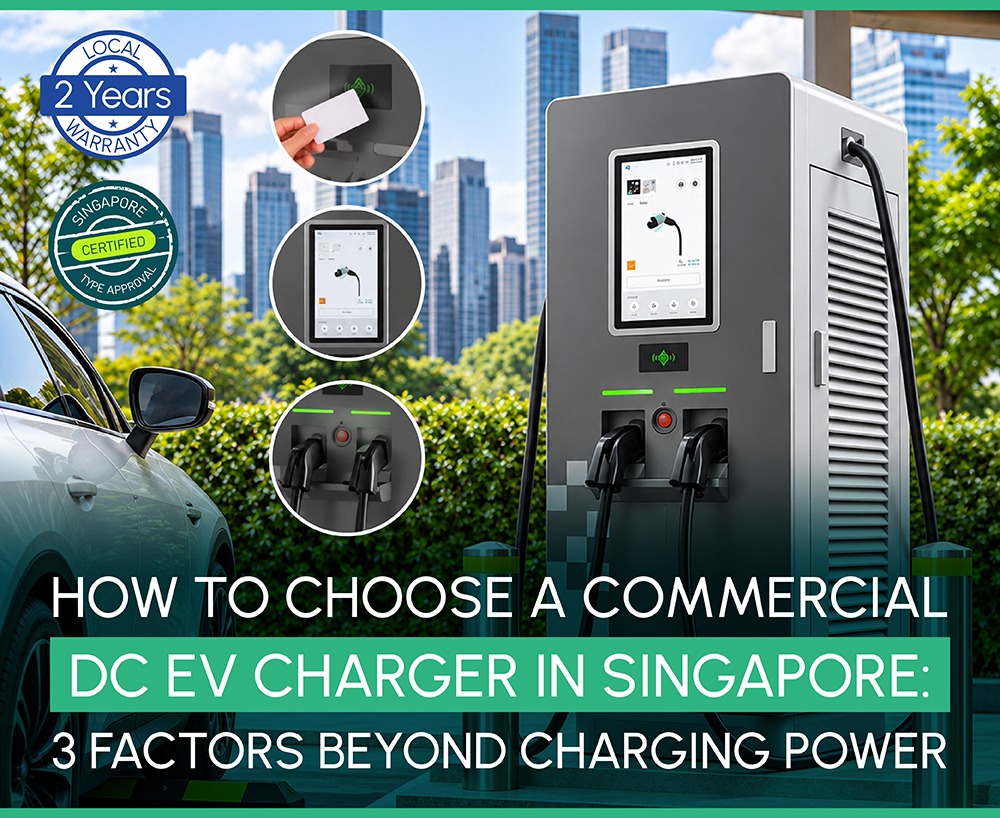
Does the Charger Configuration Suit Your Site?
No matter how fast your charger is, it won’t help much if your charging setup doesn’t match your operational needs. For example, imagine a fleet of six electric trucks sharing a single DC charger. While one truck is charging, the other five may be waiting for their turn. Even with a high-powered charger, this setup could become a bottleneck if all six trucks need to be ready for their next trip around the same time.
It’s important to consider how your vehicles operate, how your charging infrastructure fits into your daily schedule, and whether your site can accommodate the setup you have in mind.
Before deciding on a charger configuration, consider the following:
- Vehicle requirements: What types of vehicles will use the chargers, and what are their maximum DC charging rates?
- Charging schedules: How long can each vehicle remain plugged in, and when does it need to be ready for its next trip?
- Charging demand: How many vehicles need to charge each day, and how many need to charge simultaneously?
- Charger configuration: Would several single-gun chargers or fewer dual-gun chargers better suit your operations? Some dual-gun chargers share their available power between two vehicles, which can affect charging speeds when both guns are in use. Check how the charger’s power is allocated and whether it meets your vehicles’ charging schedules.
- Parking layout: Where should chargers be positioned to provide convenient access without obstructing vehicle movements or daily operations? Consider whether the cables are long enough to reach the vehicles’ charging ports in their intended parking positions.
- Electrical capacity: Can your existing electrical infrastructure support the planned chargers, or will upgrades be required?
The aim is to find a setup that keeps your operations running smoothly while making practical use of your available space and electrical capacity.
Will It Work With Your Vehicles and Charging Management System?
For commercial sites, a charger needs to work with the vehicles using it and the systems used to manage charging. Compatibility affects how effectively you can deliver charging power, manage charging sessions and coordinate operations across your site.
Vehicle Compatibility
For many commercial DC charging installations in Singapore, CCS2 is the connector to check for. However, confirm compatibility with the vehicles you intend to charge.
More importantly, check how much charging power your vehicles can actually accept. Connecting a vehicle that supports a maximum DC charging rate of 100kW to a 180kW charger does not mean it will charge at 180kW.
If you’re managing a fleet with different vehicle models, consider their individual charging requirements and whether the proposed charger configuration can accommodate future additions.
Charging Management and Data
If you plan to manage your chargers through a charging management system, check that the charger’s supported OCPP version is compatible with your chosen platform. OCPP enables communication between compatible chargers and management systems, but the specific integration should be confirmed with the relevant providers.
Depending on the platform, charging records can help you track energy consumption, understand usage patterns and identify periods of high demand.
For fleet operators, these insights can inform charging schedules and future infrastructure planning. For CPOs, utilisation data can help identify busy periods, assess charger performance and guide capacity planning across sites. Businesses with sustainability reporting objectives may also use charging data to monitor electricity consumption associated with their EVs.
Consider what information the system provides and how it can support your daily operations.
What Features Matter for Day-to-Day Operations?
Beyond charging power and compatibility, consider how the charger will be used and maintained once it is installed. The right features can make charging more convenient for drivers and simplify ongoing operations for your team.
Access and payment
RFID access or app-based authentication can help fleet and logistics operators manage who can use their chargers, while payment gateway support may be important for CPOs serving the public. Choose access and payment options that suit how your charging facilities will be used.
User experience and display
A clear, intuitive screen helps drivers follow instructions and check charging information. For sites serving users from different language backgrounds, multilingual interface options can make the charging process easier to navigate, making this especially useful for CPOs and property owners. NEG Power DC chargers also support customised video playback, giving operators the option to display advertisements, promotions or other content on the screen.
Monitoring and connectivity
Check which connectivity options are supported, such as Ethernet, 4G or Wi-Fi, and whether operators can monitor charging sessions and charger status remotely. Reliable connectivity can be particularly important for CPOs and larger logistics fleets managing chargers across multiple locations, where operators need visibility into equipment status and charging activity.
Maintenance and local support
Consider how easily chargers can be serviced when faults occur, along with the warranty coverage and technical support available. Here at NEG Power, we provide a two-year warranty supported by our local team in Singapore. Our floor-standing chargers also feature a modular design, allowing components to be serviced or replaced without removing the entire unit, helping simplify maintenance and upkeep.
Environmental protection
If your chargers will be installed outdoors, check their IP rating and whether the equipment is suitable for the conditions at your site. Also consider exposure to rain and dust, along with the placement of the charger and the reach of its cables. These factors can affect how practical the installation is and what protection the equipment needs.
Ultimately, look beyond the initial specifications and consider how the charger will perform throughout its service life. Straightforward operation, practical maintenance and responsive local support can all make a difference to the long-term management of your charging infrastructure.
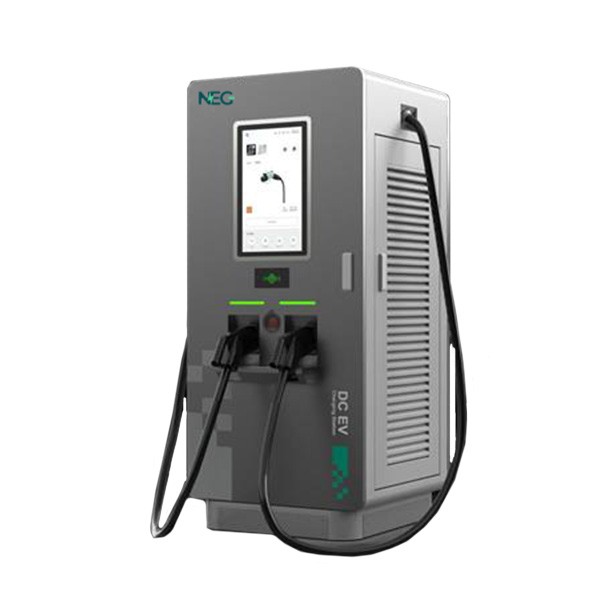


NEG DC Charging Station (DCT6)
(Asia & EUROPE, USA)
IP55 Rating
Ethernet/4G/Wi-Fi
RFID & APP Control

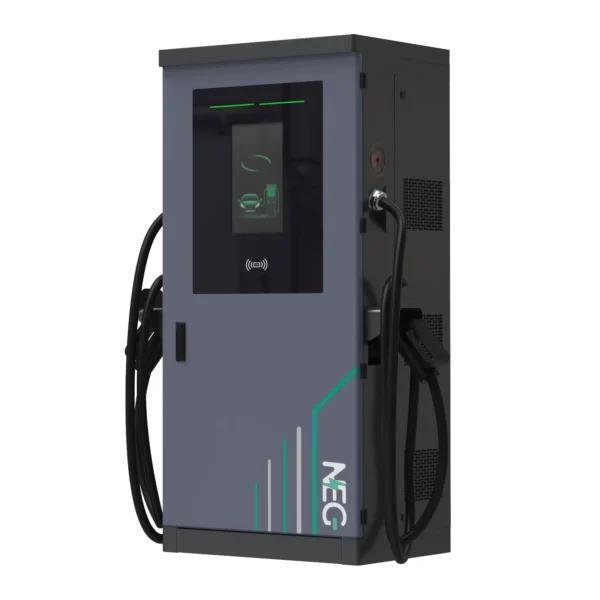
NEG DC Charging Station (DCT7)
(Asia & EUROPE, USA)
IP55 Rating
Ethernet/4G/Wi-Fi
7-inch Touch Screen
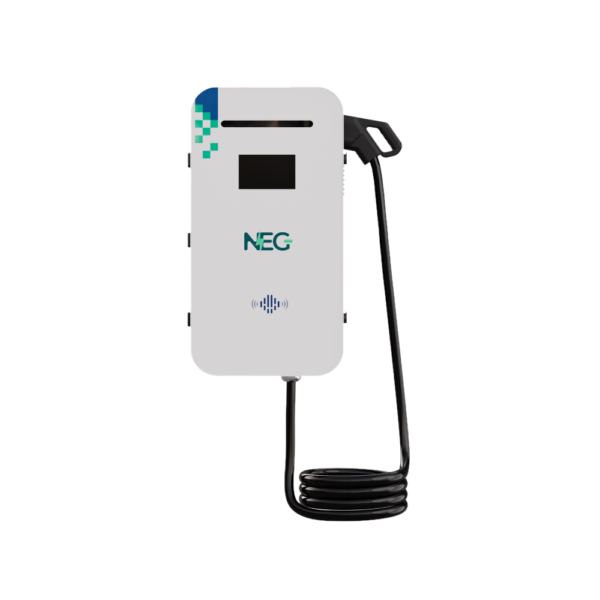
Wall-Mounted DC EV Charger
(SINGAPORE)
EV Charger
Power Output: 20kW to 40kW
Wall-mount
7″ Built-in Display

2 Guns DC EV Charging Station (With liquid cooling) (Asia & EUROPE, USA)
EV Charger2-Gun Setup
Liquid Cooling
OCPP-Compatible
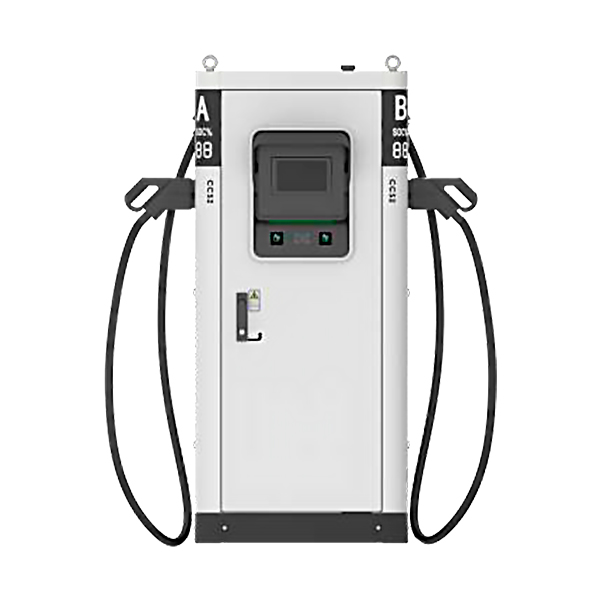
NEG DC Charger (Asia & EUROPE, USA)
EV ChargerMultiple safety features
Dual-gun setup
DC Fast charging
Choosing the Right DC Charger for Your Site
The right commercial DC charger depends on your application, operational requirements and site conditions. Here are some key considerations for common commercial charging setups.
| Application | Key considerations |
| Public charging station | Charging power, vehicle turnover, dual-gun configuration, payment options and backend integration. |
| Fleet depot or logistics facility | Vehicle charging schedules, dwell time, electrical capacity and operational management. |
| Commercial property | Expected charging demand, parking layout, user access and ongoing maintenance. |
These are starting points rather than fixed specifications. Your final configuration should account for your vehicles, charging demand and site requirements.
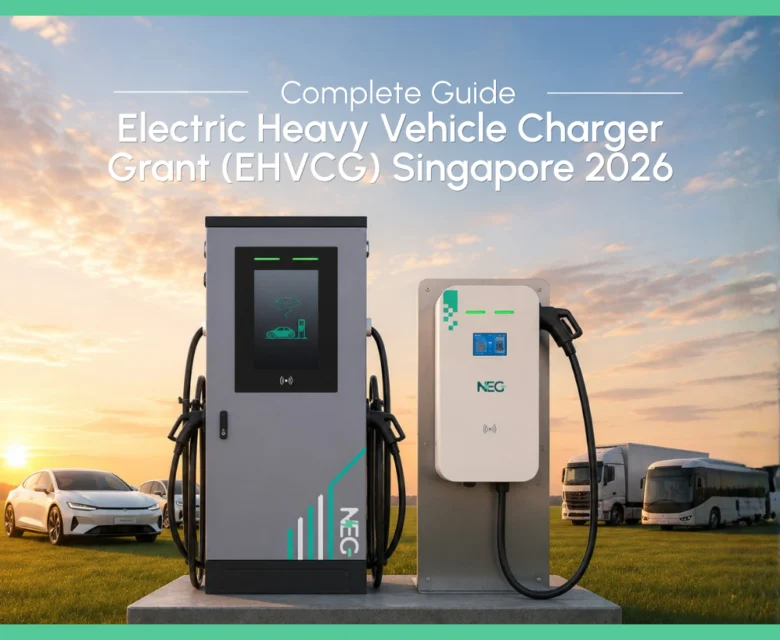
In Singapore, you should also consider the applicable regulatory and technical requirements when planning your installation. Our guide to the Electric Vehicle Charging House of Guidelines (EHVCG) provides further information on this aspect of commercial EV charging.
What’s Next? Plan Your Commercial EV Charging Installation
Once you’ve identified your requirements, the next step is to assess how they translate into a workable installation. Electrical capacity, parking layout and operational needs can all affect the charger configuration that’s suitable for your site.
NEG Power supplies commercial DC chargers and provides local support in Singapore. If you’re planning a new installation or expanding your existing charging infrastructure, contact NEG Power to discuss your requirements and arrange a site assessment.
Frequently Asked Questions
1. What should businesses look for when choosing a commercial DC EV charger?
Businesses should consider charging power, vehicle compatibility, connector configuration, charging management system integration, site conditions, maintenance requirements and total cost of ownership. The right combination depends on the intended application, whether it is a public charging station, fleet depot or commercial property.
2. How do you determine the right power rating for a commercial DC charger?
Consider the maximum DC charging rate supported by your vehicles, how long they can remain connected, how many vehicles need to charge at once and the site’s available electrical capacity. A higher-rated charger does not necessarily deliver its maximum output to every vehicle, so the charging configuration should match your operational requirements.
3. Are DC EV chargers compatible with every electric vehicle?
No. Compatibility depends on factors including the charging connector and the vehicle’s supported charging specifications. In Singapore, CCS2 is commonly used for DC charging, but businesses should confirm compatibility with the specific vehicle models they intend to support.
4. Why is OCPP compatibility important for commercial EV chargers?
The Open Charge Point Protocol (OCPP) enables communication between compatible EV chargers and charging management systems. It can support functions such as remote monitoring and charging session management, depending on the equipment and software involved. Businesses should confirm the supported OCPP version and specific integration requirements with their charger and software providers.
5. What affects the cost of installing a commercial DC EV charger in Singapore?
Installation costs depend on the charger hardware, electrical capacity available at the site, cabling, mounting, civil works and any necessary electrical upgrades. Software, connectivity, commissioning and ongoing maintenance may also contribute to the overall cost. A site assessment can help establish the installation scope and identify additional requirements.